Email Deliverability Security Reference Architecture
Understand why some emails go into the Spam/Junk/Clutter while others are successfully delivered
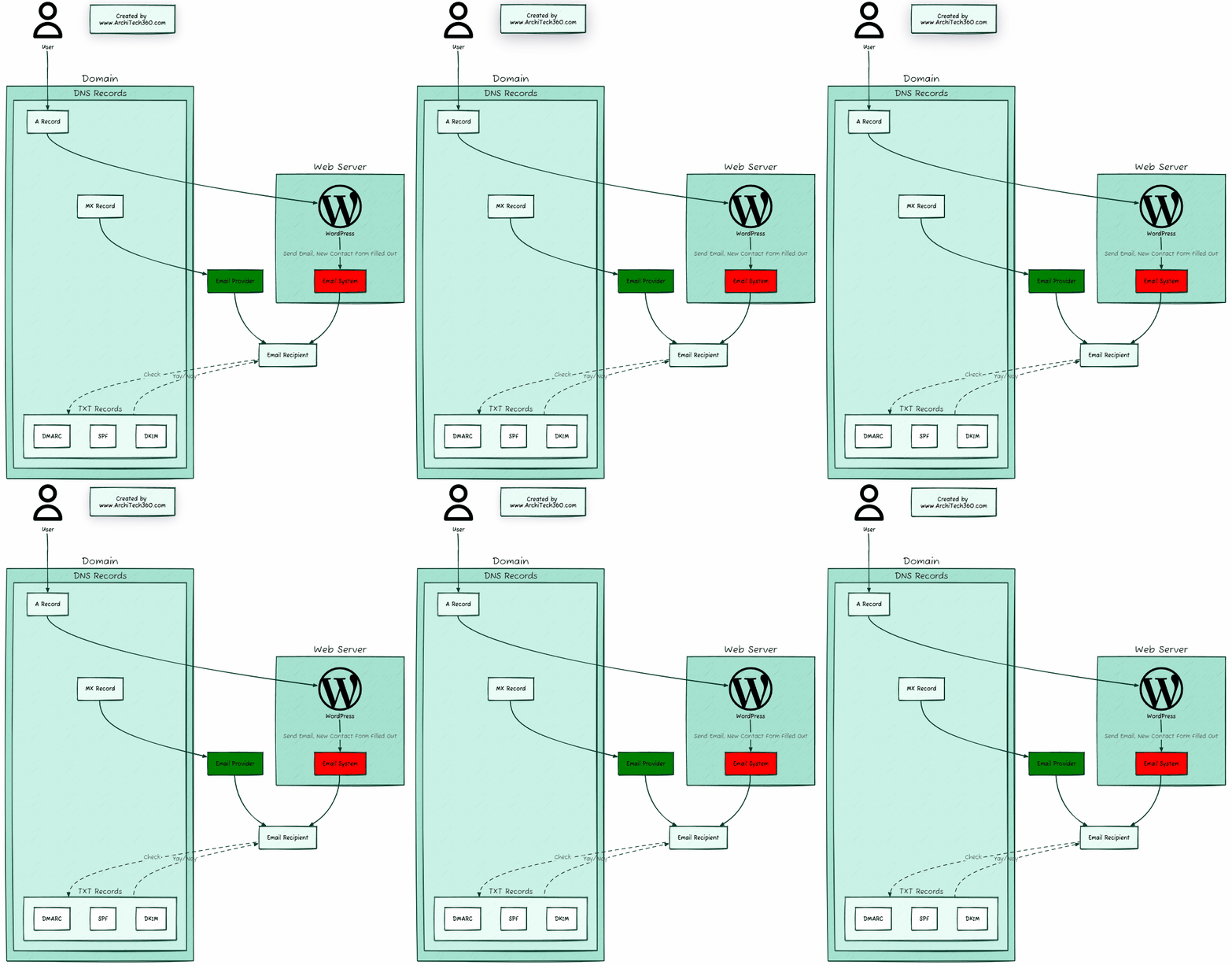
Email deliverability is a topic that crops up a lot, usually due to emails landing in the bin. This is usually due to some basic DNS records that are either completely missing or set up incorrectly. Below outlines the technical path that is followed when someone visits a website and fills out the contact form, showing how ultimately the email recipients email provider ultimately decides how to treat the incoming email from different sources to prevent spam.
- A user visits a website www.example.com
- Behind the scenes, the Domain Name System (aka. DNS) identifies the A Record of the website to understand which Web Server to direct this request through to
- This Web Server then goes on to handle the request
- What you can notice in the diagram below is that there are two places where emails can be sent from – The primary email provider, which is managed via the MX Record, and the Email System that lives on the Web Server
- When the Contact Form on the website is filled out, the Email Recipient’s Email System validates if the email has been sent from a reputable source by checking the Domain’s TXT records, specifically the SPF, DKIM and DMARC Records to calculate a confidence score and ultimately decide if they want to let that email through to the Recipient or to throw it into the Spam/Junk/Clutter folders, and in worst case scenarios simply ending up in Quarantine which results in the email never getting seen at all.
To help you keep track of these settings, we monitor your email deliverability settings to help you proactively spot issues with your configuration.
Simplified Email Deliverability Reference Architecture